This guide is for cat owners replacing plastic dishes, dealing with chin acne, or just trying to decide which material to buy before checking out. Stainless steel and ceramic are both good choices, and both beat plastic. The right one depends on how you wash, whether you drop things, and how much your cat pushes the bowl around.
The short answer: stainless steel is the practical default. It is light, nearly unbreakable, dishwasher-friendly and the easiest material to keep truly clean. Ceramic is the better pick when you want a heavy bowl that won’t slide or tip, or a raised dish for a flat-faced or senior cat, as long as it carries a lead-free, food-safe glaze and you retire it the moment it chips. This is research-based, not a hands-on test: we compared veterinary guidance, current Amazon listings and manufacturer specs, and what owners report.
Disclosure: This article contains affiliate links. As an Amazon Associate I earn from qualifying purchases.
Head to Head
Stainless Steel vs Ceramic Cat Bowls at a Glance
| Factor | Stainless steel | Ceramic / stoneware |
|---|---|---|
| Hygiene | Smooth and non-porous; holds up to daily scrubbing and the dishwasher indefinitely | Non-porous while the glaze is intact; cracks, chips and crazing can trap bacteria |
| Chin acne | Often what vets suggest when replacing plastic | Also a vet-accepted swap for plastic, if the glaze is smooth and undamaged |
| Durability | Won’t break if dropped; can dent | Can chip or shatter if dropped |
| Stability | Light; relies on a rubber or silicone base | Heavy; resists sliding and tipping on its own |
| Safety watch-outs | Look for 304 (18/8) food-grade steel | Look for lead-free, food-safe glaze from a known brand |
| Noise and look | Some cats dislike the clatter or reflection | Quiet, and comes in more styles and colors |
| Typical price tier | $ to $$ | $$$ to $$$$ |
Typical tiers reflect the picks on this page.
The Shortlist
Quick Picks
Three stainless and three ceramic bowls that cover most cats. Want to cut down on refills too? Pair a bowl with one of our best smart cat feeders or best smart water fountains.

Wellbro 304 Stainless Bowls (2-pack)
$$ Food-grade 304 steel, wide and shallow, with a non-slip silicone base. Two bowls for food and water.

Petdream Stainless Plates (4-pack)
$ Four wide, shallow steel plates in one pack, so there’s always a clean one ready.

Van Ness Whisker-Friendly Saucer
$$ Simple US-brand saucer dish with a bonded rubber base. Small and shallow.

SPOT Ceramic Stoneware Bowl
$$$ Heavy glazed stoneware that stays put. A classic, no-frills ceramic bowl.

Mora Ceramic Pet Bowl (Small)
$$$ Heavy ceramic with a glaze the brand says is lead free, plus rounded inside corners.
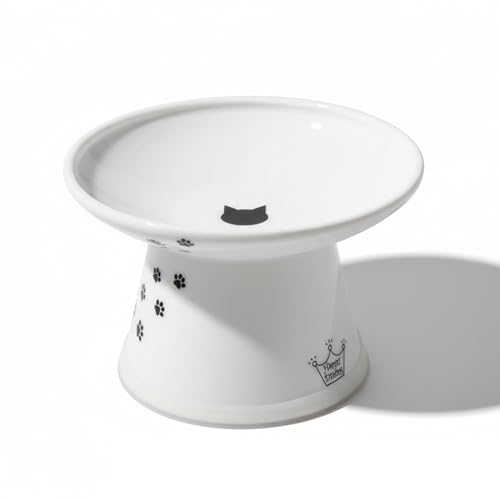
Necoichi Extra-Wide Raised Bowl
$$$$ Extra-wide porcelain on legs, free of lead and cadmium per the maker. Good for flat-faced and senior cats.
At a Glance
Compare the Picks
| Bowl | Material | In the box | Key detail | Best for | Price tier |
|---|---|---|---|---|---|
| Wellbro 304 Stainless Bowls (2-pack) | 304 stainless steel | 2 bowls | 5.9 in wide, 1.2 in tall, silicone base | Most cats, daily dishwasher use | $$ |
| Petdream Stainless Plates (4-pack) | Stainless steel | 4 plates | 6.7 in wide, shallow, silicone base | Wet food, multi-cat homes | $ |
| Van Ness Whisker-Friendly Saucer | Stainless steel | 1 bowl | 8 oz saucer, bonded rubber base | Single cat, small portions | $$ |
| SPOT Ceramic Stoneware Bowl | Glazed stoneware | 1 bowl | Heavyweight, dishwasher safe | Bowl pushers on a budget | $$$ |
| Mora Ceramic Pet Bowl (Small) | Ceramic, lead-free glaze (per brand) | 1 bowl | 11 oz, heavy base, rounded corners | Owners who want ceramic with a clear glaze claim | $$$ |
| Necoichi Extra-Wide Raised Bowl | Porcelain, lead and cadmium free (per brand) | 1 raised bowl | 6.1 in wide, 2.75 in legs, silicone ring | Flat-faced, senior and messy eaters | $$$$ |
Price guide: $ budget · $$ mid-range · $$$ premium · $$$$ top-end. Tiers compare cost per bowl across the picks on this page (multi-packs are split per bowl), based on Amazon prices when we wrote this; prices change often, so tap through for today’s price.
The Details
Wellbro 304 Stainless Bowls: the easy everyday default
Wellbro is a mid-range pick $$ for a two-pack, and the stainless set we’d point most owners to first. The listing names food-grade SUS304 steel, the grade veterinary nurses suggest looking for (also sold as 18/8), which is the same steel used in kitchen cookware.
Each bowl is 5.9 inches across and 1.2 inches tall with a 12-ounce capacity, so it suits both kibble and wet food, and the silicone base keeps it from skating across tile. Wellbro says the bowls are dishwasher safe, stackable and won’t hold onto food odors, which matches what you’d expect from polished steel.
Who it’s for: Anyone switching off plastic who wants one food bowl and one water bowl they can throw in the dishwasher every day.
Pros
- 304 (18/8) food-grade stainless steel
- Wide, shallow shape many cats prefer
- Silicone base resists sliding
- Dishwasher safe and stackable
Cons
- Light, so a determined cat can still nudge it
- Steel can dent if dropped hard
- Only two bowls if you rotate daily
Petdream Stainless Plates: a stack of clean dishes, always
Petdream is a budget-tier pick $ because you get four plates in one listing. Each is 6.7 inches wide and shallow, close to a saucer, which makes it easy for cats to lick wet food clean.
Petdream describes thick steel at about 3.1 ounces per bowl, with a silicone non-slip base and dishwasher-safe construction. The listing doesn’t name a steel grade, so if 304 matters to you, the Wellbro set is the more clearly labeled option.
Who it’s for: Wet-food households and multi-cat homes where you want a fresh dish at every meal without running the dishwasher twice a day.
Pros
- Four plates per pack
- Very wide, shallow shape for wet food
- Non-slip silicone base
- Dishwasher safe
Cons
- Steel grade isn’t stated on the listing
- Too shallow to work well as a water bowl
- Light plates can slide on smooth floors
Van Ness Whisker-Friendly Saucer: simple and small
Van Ness is a mid-range pick $$ on a per-bowl basis. Van Ness is a long-running US pet-dish brand, and this is its whisker-friendly saucer: a shallow, polished stainless dish that holds 8 ounces, with skid-proof rubber bonded to the bottom.
It is the simplest way to try steel without buying a multi-pack. The listing calls the steel high-grade and BPA free but doesn’t give a grade number.
Who it’s for: Single-cat homes that want one small, shallow steel dish or a cheap trial before committing to a set.
Pros
- Sold singly, so you buy only what you need
- Shallow saucer shape
- Bonded rubber base
- Established brand
Cons
- 8 oz is small for water
- Steel grade not listed
- Costs more per bowl than multi-packs
SPOT Ceramic Stoneware Bowl: heavy, simple and stays put
SPOT by Ethical Products is a premium-tier pick $$$ by our per-bowl scale, but it is the most affordable ceramic here. It is heavyweight glazed stoneware, and the weight is the point: Ethical Products says it eliminates movement and spillage, which is the main reason to choose ceramic over steel.
It is dishwasher safe with a high-gloss finish. The Amazon listing doesn’t mention lead testing, so if that is a priority, the Mora and Necoichi bowls make clearer lead-free claims.
Who it’s for: Cats that push light bowls around the floor, and owners who want a quiet, classic dish at the lowest ceramic price.
Pros
- Heavy stoneware resists sliding and tipping
- Dishwasher safe
- Glossy, easy-to-wipe surface
- Classic look
Cons
- Listing makes no lead-free claim
- Can chip or break if dropped
- Deeper and narrower than whisker-friendly dishes
Mora Ceramic Pet Bowl: ceramic with a clear glaze promise
Mora is a premium-tier pick $$$ for a single 11-ounce bowl. Its big selling point is the glaze: Mora says its glazes are lead free, and points out that there is no specific US rule on lead in pet products. That is the right question to ask of any ceramic bowl.
Mora also says its clay is stronger than competitors’ and that the bowl has a heavier bottom and rounded inside corners so food doesn’t get stuck, plus a free refund or replacement for defective bowls. The strength claim is the maker’s; we haven’t tested it.
Who it’s for: Owners who prefer ceramic and want a brand that states plainly that its glaze is lead free.
Pros
- Brand states lead-free glaze
- Heavy base for stability
- Rounded inside corners are easy to clean
- Defect replacement promise
Cons
- Sold singly
- Small size is better for food than water
- Ceramic can still chip if dropped
Necoichi Extra-Wide Raised Bowl: porcelain at a better height
Necoichi is a top-end pick $$$$ and the most specialized bowl here. It is porcelain that Necoichi says is free of lead and cadmium and meets US, EU and Japanese safety standards, and it is microwave and dishwasher safe.
The dish is 6.1 inches wide and just over an inch deep, raised on 2.75-inch legs, with a removable silicone ring to stop sliding. Necoichi markets it for flat-faced breeds, seniors and messy eaters. Some of its health claims (vomiting, digestion) come from the maker, not from veterinary research we found, so buy it for comfort and height, not as a medical fix.
Who it’s for: Flat-faced cats like Persians, older cats that seem stiff when bending down, and messy eaters who spill from flat dishes.
Pros
- Raised height and extra-wide dish
- Brand states lead and cadmium free
- Removable non-slip silicone ring
- Microwave and dishwasher safe
Cons
- Highest cost per bowl here
- Food dish only, small for water
- Health claims are the manufacturer’s
Buy Smarter
How to Choose Between Stainless Steel and Ceramic
- Retire plastic first. VCA Animal Hospitals notes a possible link between plastic dishes and feline chin acne, because scratches in plastic harbor bacteria, and suggests smooth, non-porous dishes like stainless steel or glass, washed daily. Zoetis and other vet sources list ceramic as an option too.
- Choose steel if you want easy and unbreakable. It survives drops, the dishwasher and years of scrubbing. Look for 304 or 18/8 on the label; the veterinary nursing guidance we reviewed warns that bowls labeled for pet use only may use lower-grade steel.
- Choose ceramic if your cat moves the bowl. A heavy ceramic or stoneware dish stays put without a rubber base and is quieter. Buy from a brand that states a lead-free, food-safe glaze, and replace the bowl when it chips, cracks or the glaze crazes.
- Shape matters as much as material. “Whisker fatigue” is a marketing term, not a recognized condition: a 2021 study in the Journal of Feline Medicine and Surgery found shallow dishes didn’t change how much cats ate, though many preferred them in a side-by-side test. A wide, shallow dish is still a sensible, low-risk choice, especially for wet food.
- Consider a raised bowl for flat faces and older cats. Raised ceramic dishes like Necoichi’s bring food closer to the cat. If your cat’s appetite changes suddenly, see your vet before blaming the bowl.
- Wash daily, whatever you choose. A Hartpury University study cited by Today’s Veterinary Nurse found that bowl material and how long a bowl has been in use both affect bacteria levels. Rotating two sets makes daily washing painless.
Setting up a new cat’s corner? Our best budget cat trees for small apartments guide covers the next thing on most lists.
Questions
FAQ
Is stainless steel or ceramic better for cats?
Both are good and both beat plastic. Stainless steel is the more practical everyday choice because it won’t break and is easy to keep clean. Ceramic is better when you want a heavy bowl that won’t slide, provided it has a lead-free, food-safe glaze and no chips.
Which bowl is best for cat chin acne?
Vets commonly suggest swapping plastic for a smooth, non-porous dish, with stainless steel the most common recommendation, and washing it daily. Undamaged glazed ceramic is also acceptable. If the chin is swollen, crusted or not improving, see your vet.
Are ceramic cat bowls safe?
Yes, when they’re made with a lead-free, food-safe glaze and the surface is intact. Avoid decorative pottery not meant for food, and replace any bowl that is chipped, cracked or has crazed glaze.
Do cats dislike stainless steel bowls?
Some do. Veterinary nursing guidance notes some pets dislike the look or sound of steel. If your cat hesitates, try a ceramic bowl or a steel bowl with a silicone base, which is quieter.
Is whisker fatigue real?
It isn’t a recognized veterinary condition, and a small 2021 study found no change in eating with “whisker-friendly” dishes. Many cats still preferred the shallow, wide dish when given the choice, so it can be a reasonable pick.
How often should I wash my cat’s bowls?
Daily, with hot soapy water or the dishwasher. Keeping a second set makes it easy.
Final Take
The Verdict
Buy stainless steel unless you have a reason not to. The Wellbro 304 set $$ is our everyday pick, and the Petdream four-pack $ is the value play for wet-food homes.
Go ceramic if your cat shoves light bowls around or you just prefer the look: SPOT stoneware $$$ is the budget option, Mora $$$ is our pick for a clearly lead-free glaze, and the raised Necoichi $$$$ is worth it for flat-faced or senior cats.
Tap through to Amazon for today’s price and shipping. As an Amazon Associate I earn from qualifying purchases. The Nested may also earn a commission on purchases made through other links on this page at no extra cost to you. This article is general product information, not veterinary advice. We have not hands-on tested these bowls. Sources include VCA Animal Hospitals and Zoetis on feline chin acne, Today’s Veterinary Nurse guidance on pet bowl materials, Tufts Petfoodology and the 2021 Journal of Feline Medicine and Surgery study on whisker stress, and the manufacturers’ Amazon listings. Hero photo: Angelina Zhang / Pexels.